
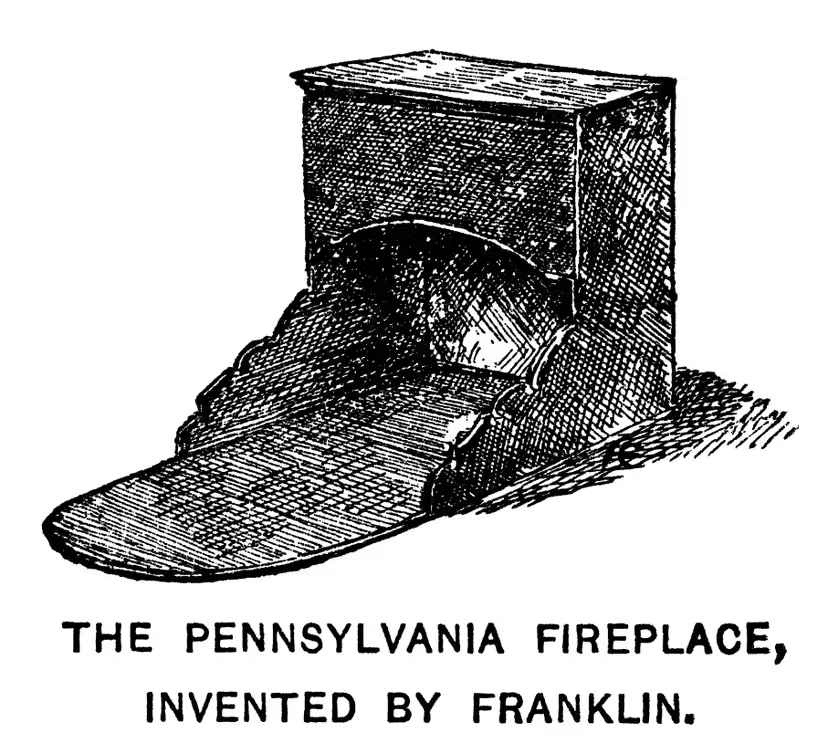
The Franklin stove, also known as the Pennsylvania fireplace, is a remarkable invention that has had a significant impact on the way we heat our homes. Invented by Benjamin Franklin in 1742, this freestanding, cast-iron wood-burning stove revolutionized the way people warmed their houses during the 18th century. Over the years, the design of the Franklin stove has undergone various improvements, making it more efficient, safe, and visually appealing. In this article, we will explore the evolution of the Franklin stove, from its humble beginnings to its modern-day counterparts.
Contents
The Original Franklin Stove: A Safer and More Efficient Alternative
Benjamin Franklin’s motivation for inventing the Franklin stove stemmed from the need to address the dangers associated with traditional indoor fireplaces. In the 18th century, house fires caused by open fireplaces were alarmingly common, leading to numerous fatalities. Additionally, there was a shortage of firewood, necessitating the development of a heating source that would consume less fuel.
The original design of the Franklin stove featured two key elements: a hollow baffle and an inverted siphon. These features allowed for improved heat extraction compared to conventional fireplaces. The inverted siphon, resembling a U-shaped flue, drew the hot burning gases upward and over the hollow baffle positioned at the back of the stove. As the gases passed over the baffle, the heat was transferred to the cast-iron walls, radiating warmth into the room through two strategically placed holes near the top of the stove.
However, despite its innovative design, the original Franklin stove had a significant flaw. The positioning of the flue at the bottom of the stove hindered proper draft formation, resulting in reduced efficiency. To maintain a strong draft, the fire had to burn continuously to keep the flue hot. This flaw led to poor sales and limited adoption of the stove.
Improvements and Innovations: Enhancing Efficiency and Functionality
Recognizing the limitations of his original design, Benjamin Franklin welcomed improvements and modifications to the Franklin stove by other inventors. One notable improvement came from David R. Rittenhouse, who introduced an L-shaped flue in the late 1780s. This modification significantly improved the stove’s draft, making it more efficient and popular among users.
The adoption of cast iron as the primary material for the Franklin stove was another crucial development. Franklin drew inspiration from Jean Desaguliers’ experiments, which demonstrated that cast iron was a superior heat radiator compared to traditional masonry fireplaces. The use of cast iron in the stove’s construction allowed for a steady and consistent heat output, making it more effective at heating a house.
Over time, additional advancements were made to the Franklin stove to enhance its functionality and user experience. These included the addition of a cast iron griddle on the stove’s top for cooking purposes, as well as the incorporation of ceramic viewing glass, which not only radiated heat quickly but also provided a larger view of the fire. These innovations combined the charm of a traditional fireplace with the convenience and efficiency of a modern stove.
Modern Wood Stoves: Building on Franklin’s Legacy
While the traditional Franklin stove still holds a place in some homes, modern wood stoves have surpassed it in terms of efficiency, clean burning, and safety. Modern wood stoves have undergone significant advancements, incorporating the latest technologies to provide users with an exceptional heating experience.
One of the key advantages of modern wood stoves is their ability to burn a variety of fuels, including LP (liquefied petroleum) or NG (natural gas). This flexibility allows users to choose the fuel source that best suits their needs and preferences. Additionally, modern wood stoves do not require electricity, making them a reliable heat source during power outages.
Another significant improvement in modern wood stoves is their superior heat retention and distribution. Soapstone, a material known for its excellent heat retention properties, is often used in the construction of modern stoves. This enables the stove to radiate heat even after the fire has been extinguished, providing long-lasting warmth to the room.
Furthermore, modern wood stoves offer versatile direct vent installation options, allowing for easy integration into various home setups. Whether venting through a wall, roof, or chimney, these stoves provide flexibility in installation without compromising safety or efficiency.
Conclusion
The Franklin stove, invented by Benjamin Franklin in 1742, marked a significant milestone in the history of home heating. Its innovative design and focus on safety and efficiency transformed the way people heated their homes during the 18th century. Over time, the Franklin stove underwent improvements and modifications, leading to the development of modern wood stoves that offer even greater efficiency and functionality.
Although the original Franklin stove had its limitations, it laid the foundation for the advancements that followed. The incorporation of features such as the hollow baffle, inverted siphon, and cast iron construction set the stage for a new era of heating technology. Today, modern wood stoves build upon Franklin’s legacy, offering homeowners a wide range of options that combine the charm of a traditional fireplace with the benefits of modern engineering.
As we continue to seek more efficient and sustainable methods of heating our homes, it is essential to recognize the contributions made by inventors like Benjamin Franklin. The evolution of the Franklin stove serves as a testament to the power of innovation and the enduring impact of great ideas.